The story of a young entrepreneur who left the city to return home and build SACHI – a Xu Nau specialty rice-paper company now valued at millions of U.S. dollars. Nguyễn Hữu Vinh, 37, of Bình Định Province, recently declined an investment bid from “Shark” Nguyễn Văn Thái (co-founder and vice chairman of Thái Hương Group) during the seventh season of Shark Tank Vietnam.
“I’m sorry, but I don’t agree,” was Vinh’s response to Shark Thái’s offer of a 5 billion VND investment for 10% equity in SACHI, along with an additional 10 billion VND in loans for the company. While the two sides couldn’t reach a deal, Shark Thái’s proposal effectively valued SACHI in the multi-million-dollar range. Based on his valuation, the company was estimated to be worth around 50 billion VND—nearly 2 million USD.
From His Third Startup Attempt…
Nearly seven years ago, in 2017, after graduating from university and earning a master’s degree in agricultural economics from Nong Lam University in Ho Chi Minh City—along with experiencing a few failed startup ventures—Vinh decided to return to his hometown in Bình Định Province.
Vinh’s decision to leave the city and return to the countryside, marked the beginning of a new journey – a mission to bring Xu Nau rice paper to consumers across the country. Rice paper, especially the Toasted Coconut Tapioca Cracker variety from Tam Quan (Binh Đinh), has long been known not only in the province itself but also in neighboring regions. However, this traditional rice paper is quite thick and typically requires a charcoal grill to enjoy properly. Once grilled, it tends to soften quickly if not eaten right away, making it less convenient for city people who crave that crispy, rich coconut flavor on the spot. On top of that, production is highly seasonal—rice paper can only be made during the sunny months, as the rainy season doesn’t provide enough sunlight to dry the crackers.
Through years of development and innovation, Vinh applied modern agricultural processing technologies – such as Automatic mixture spreading system, Closed solar-heat simulated drying system – to transform the traditional product. He began introducing pre-grilled, ready-to-eat rice paper snacks, conveniently packaged for modern consumers. One of his biggest hurdles was packaging. It took him months to figure out how to vacuum-seal and compress the packaging to reduce breakage—a key reason why many retailers had initially rejected the product. In 2019, Vinh’s breakthrough came when his automated multi-shape coconut rice paper machine won an award from the People’s Committee of Bình Định Province at the 11th Provincial Innovation and Technical Creativity Contest. That same year, SACHI rice paper officially hit the market.
From there, SACHI’s product line continued to grow—not just Toasted Coconut Tapioca Cracker, but also with sesame rice paper, seaweed rice paper, and more. The brand steadily expanded its presence in the market. Despite facing many challenges during the COVID-19 pandemic, SACHI managed to gain traction, with its products reaching 20 provinces and cities across Vietnam within just two years.
In 2021, SACHI posted a profit of around 800 million VND—a notable achievement for a startup rooted in traditional, rural-inspired snacks. That figure has continued to rise, with the company reporting approximately 3.3 billion VND in profit in 2023.
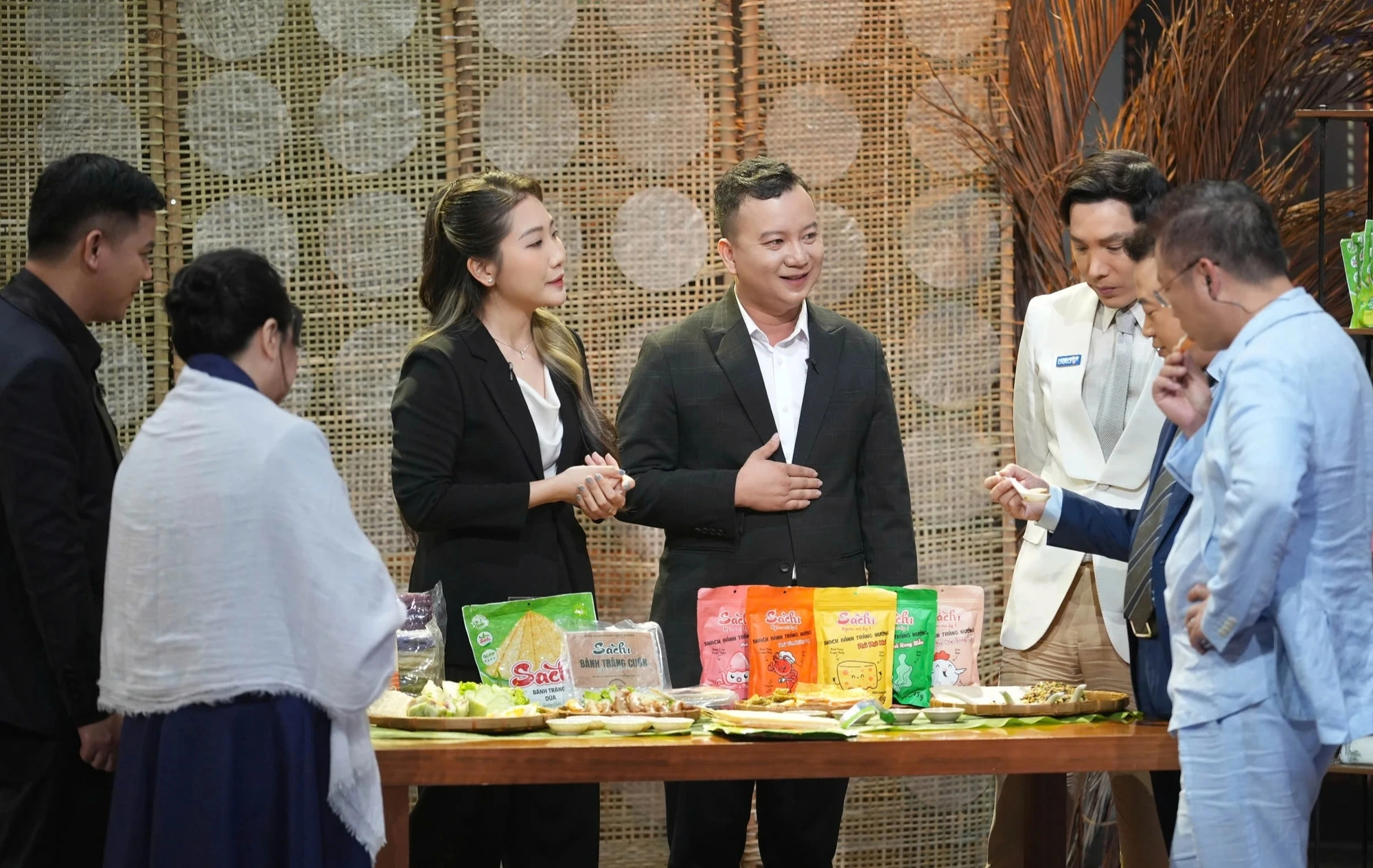
Nguyen Huu Vinh (4th from left) introduces the story of rice paper to the “sharks” in Shark Tank season 7.
To a Million-Dollar Company Breaking into the U.S. Market
Not stopping at these achievements, to expand further in the market, SACHI’s production system and products have earned several prestigious certifications, including OCOP 4-star, ISO 14001, ISO 22000, FDA, and the National Typical Rural Industrial Product certificate awarded by the Ministry of Industry and Trade in 2023. SACHI rice paper products are now available in most major supermarket chains nationwide, including Emart, WinMart, Lotte, Co.opmart, BigC, Annam, and more.
No longer limited to the domestic market, SACHI has expanded its reach by exporting rice paper to Taiwan, Canada, and even the U.S.—a market known for its strict quality standards. This achievement not only brings a taste of home to Vietnamese people living abroad but also marks a significant step for a Vietnamese brand going global. SACHI’s rice paper is being nurtured to become a “delicious twist” — transforming into a familiar snack for Western consumers.
Alongside its market growth, SACHI has secured investment, built a factory, and expanded production. Recognizing SACHI’s potential as its products reached more provinces, IPP Group—a company specializing in distribution—began investing in SACHI in 2022. Thanks to IPP’s strong distribution channels, SACHI’s revenue jumped from 15 billion VND in 2022 to 24 billion VND in 2023, with projections to hit 50 billion VND this year. Looking ahead, SACHI aims for long-term revenue of 250 billion VND by 2029. On the production side, the company currently has a capacity of 1,200 tons per year for grilled rice paper and 240 tons per year for dried noodles.
Given these achievements, it’s no surprise that “Shark” Thái made an investment offer to Nguyen Huu Vinh on Shark Tank Vietnam Season 7. But the young entrepreneur from Xu Nau declined. In an interview with Thanh Nien News, Vinh explained, “I refused not out of arrogance or overconfidence, but simply because SACHI wants to find a true partner who loves specialty products and can support us in exporting and bringing our products to international markets—someone like ‘Shark’ Hung Anh or ‘Shark’ Phu.”
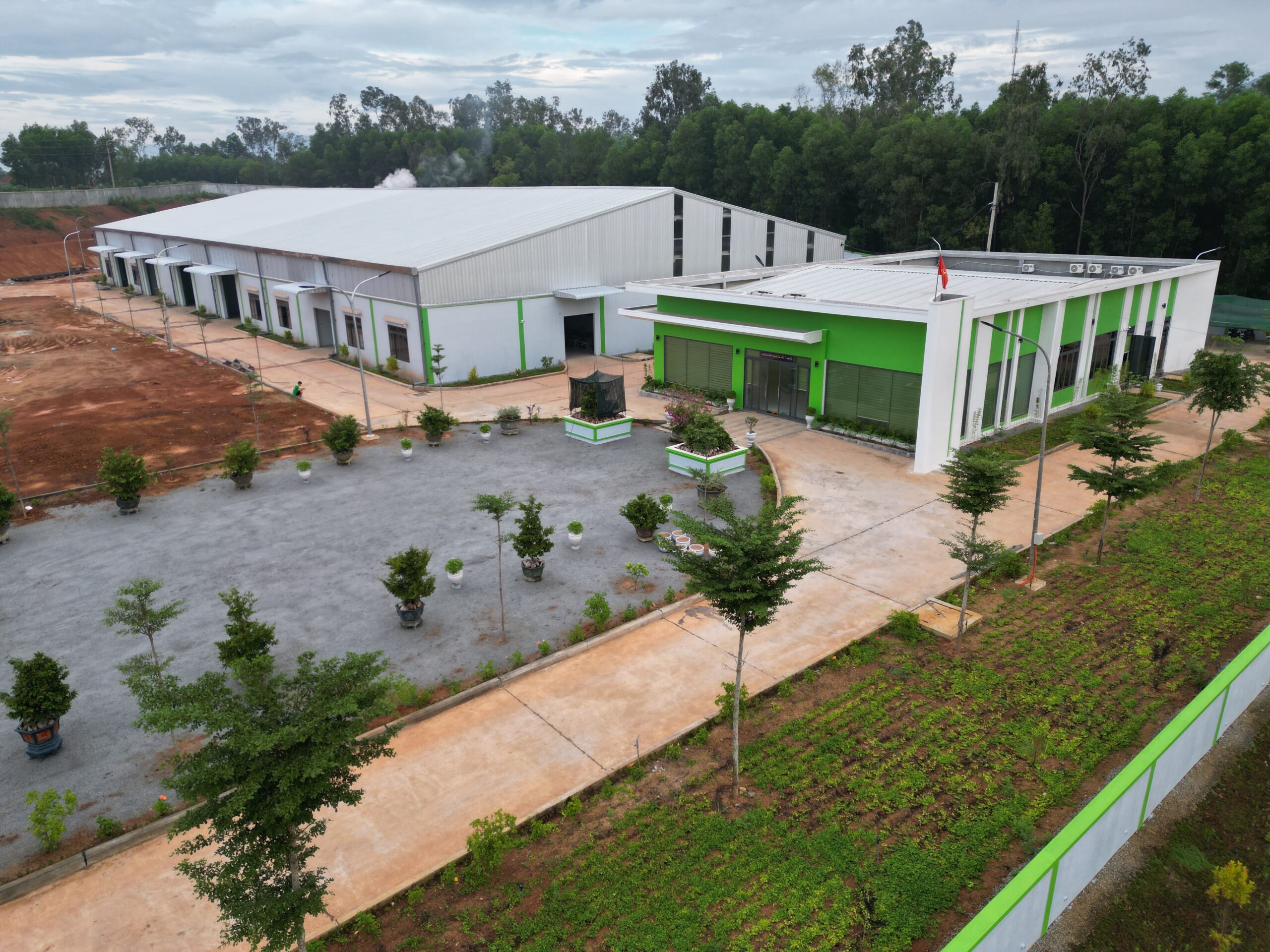
To date, SACHI has established two factories. In the early days, the company built its first factory. By early 2024, to boost production capacity and meet market demand, SACHI inaugurated a new factory for traditional products like dried noodles and rice paper in the Bong Son Industrial Cluster (Hoai Nhon town, Binh Dinh province). The facility spans nearly 1.8 hectares, including 5,000 m² of workshop space.
Equipped with advanced technology, the factory meets export quality standards, focusing on clean, high-quality, and environmentally friendly products. One key innovation is the steam heat-drying technology, which ensures consistent product quality regardless of weather conditions.
All raw materials for the factory are sourced from local farmers in Hoài Nhơn. In 2024, the company plans to expand its raw material supply network, linking to 150 hectares of rice fields and 30 hectares of sesame cultivation. SACHI aims to make effective use of abundant local ingredients such as rice, wheat flour, onions, garlic, salt, and chili.
Developing 2 factories
To date, Sachi has 2 factories. In the early days of its establishment, Sachi built the first factory. By early 2024, to increase production capacity to meet market demand, the company inaugurated an additional factory producing traditional products such as dried vermicelli and rice paper in Bong Son Industrial Park (Hoai Nhon Town, Binh Dinh Province) with an area of nearly 1.8 hectares, including 5,000 m² of factory space. The factory is equipped with technology that meets the requirements of product quality that meets export standards, in the direction of clean, high-quality and environmentally friendly products. Including steam heat drying technology to ensure consistent product quality, regardless of the weather. All raw materials for the factory are purchased from farmers in Hoai Nhon Town and in 2024, the company will implement a linkage of raw material areas for the factory with a scale of 150 hectares of rice and 30 hectares of sesame. Sachi’s purpose is to effectively utilize locally available raw materials such as rice, wheat flour, onions, garlic, salt, chili, etc.